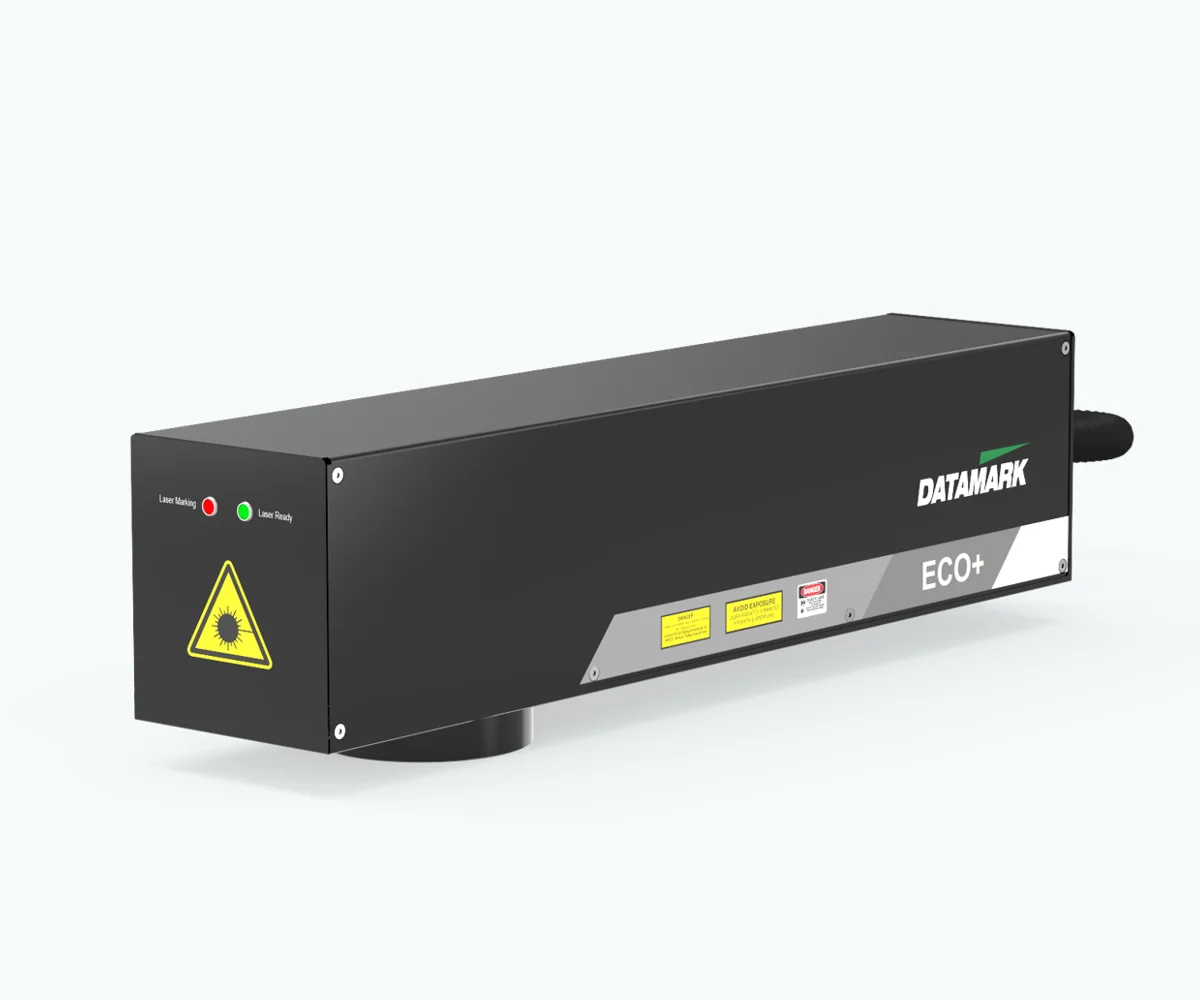
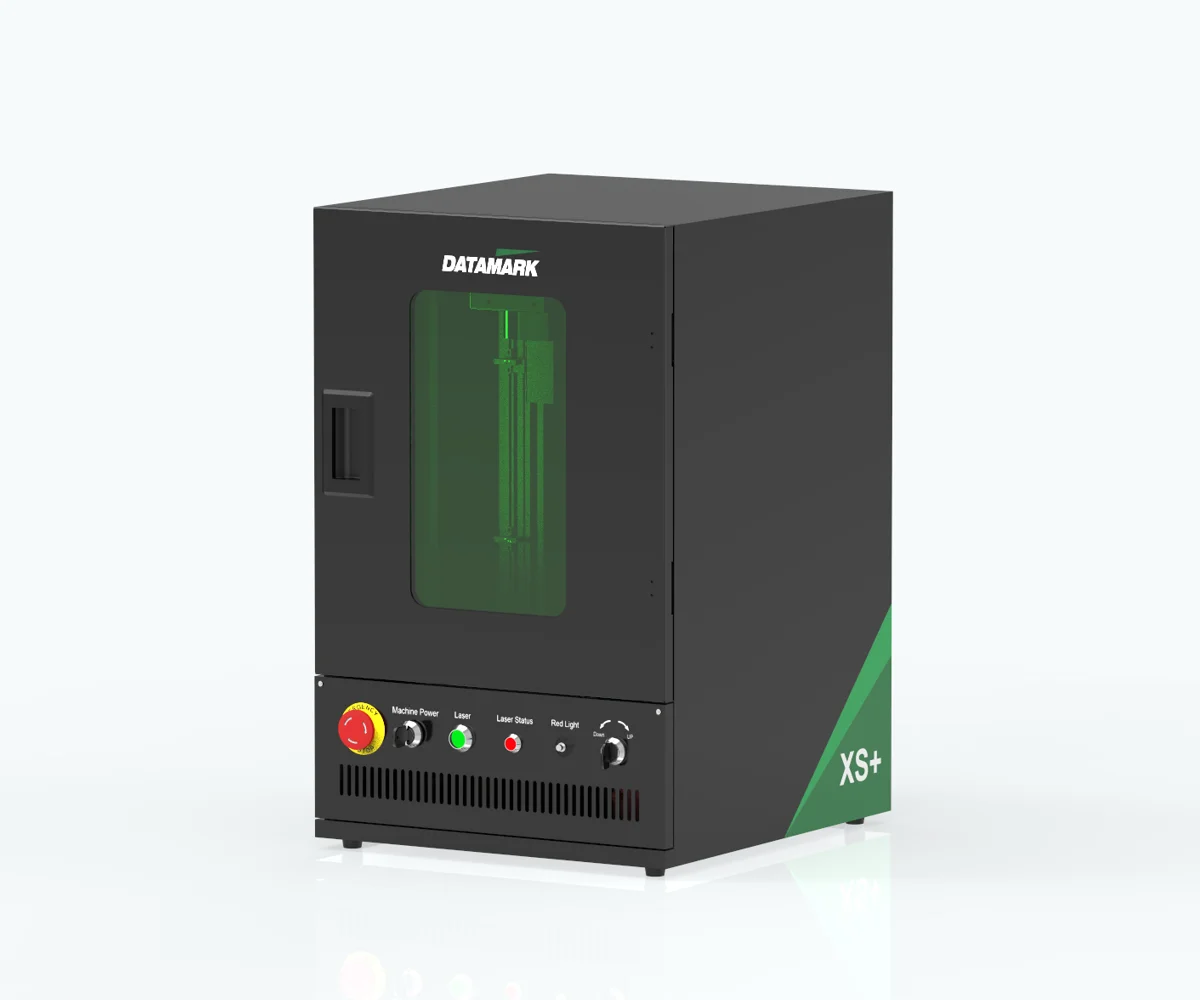
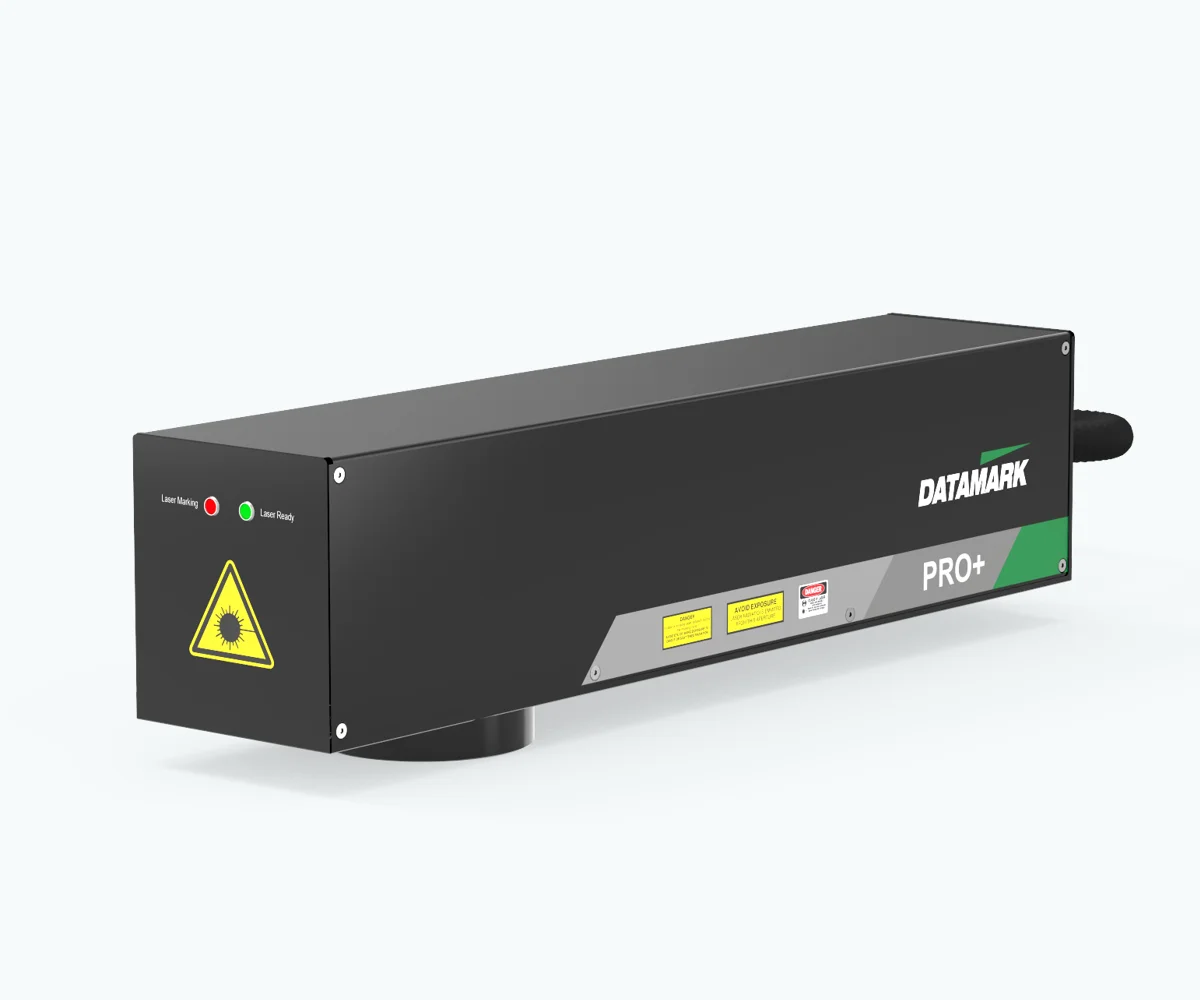
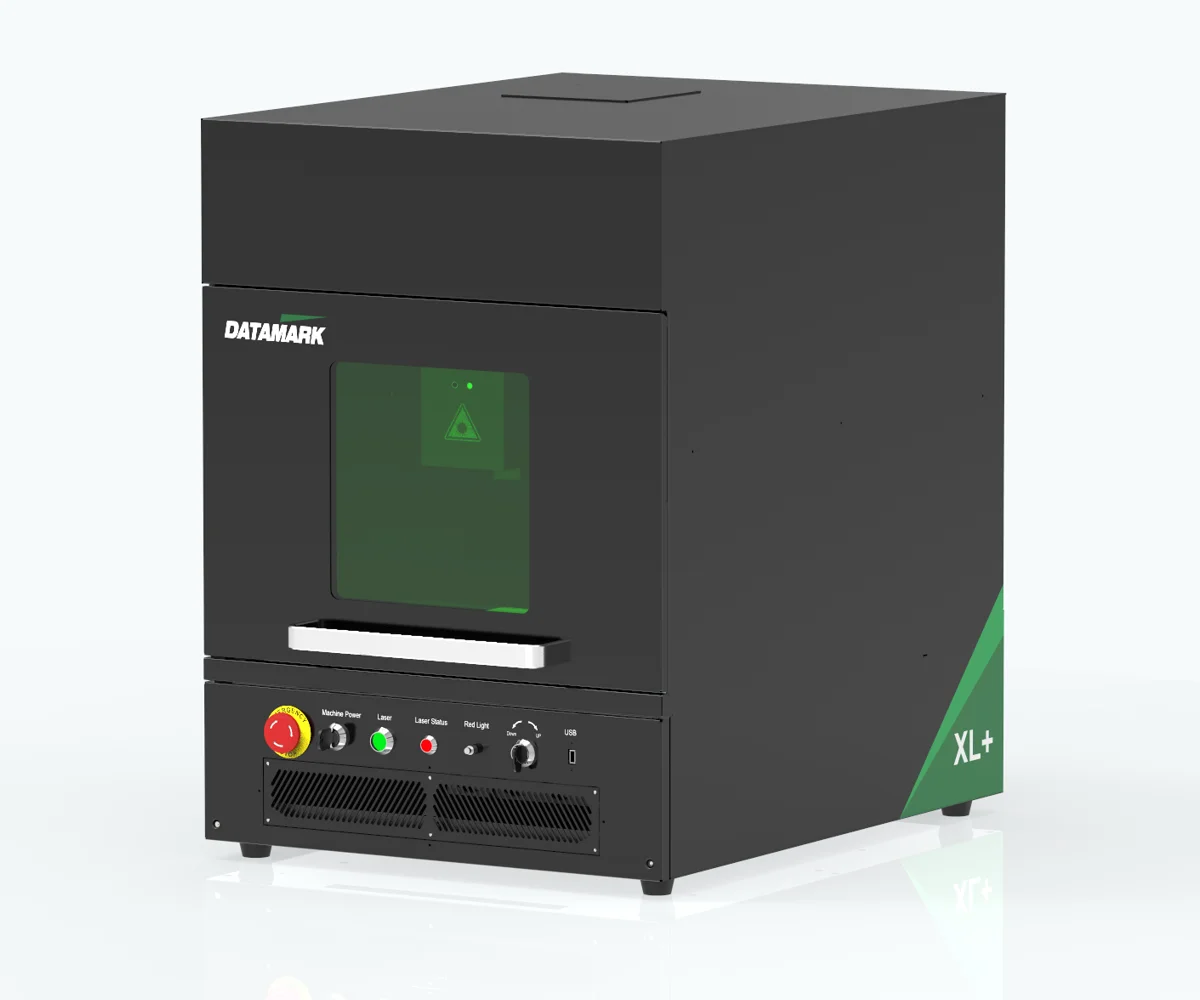
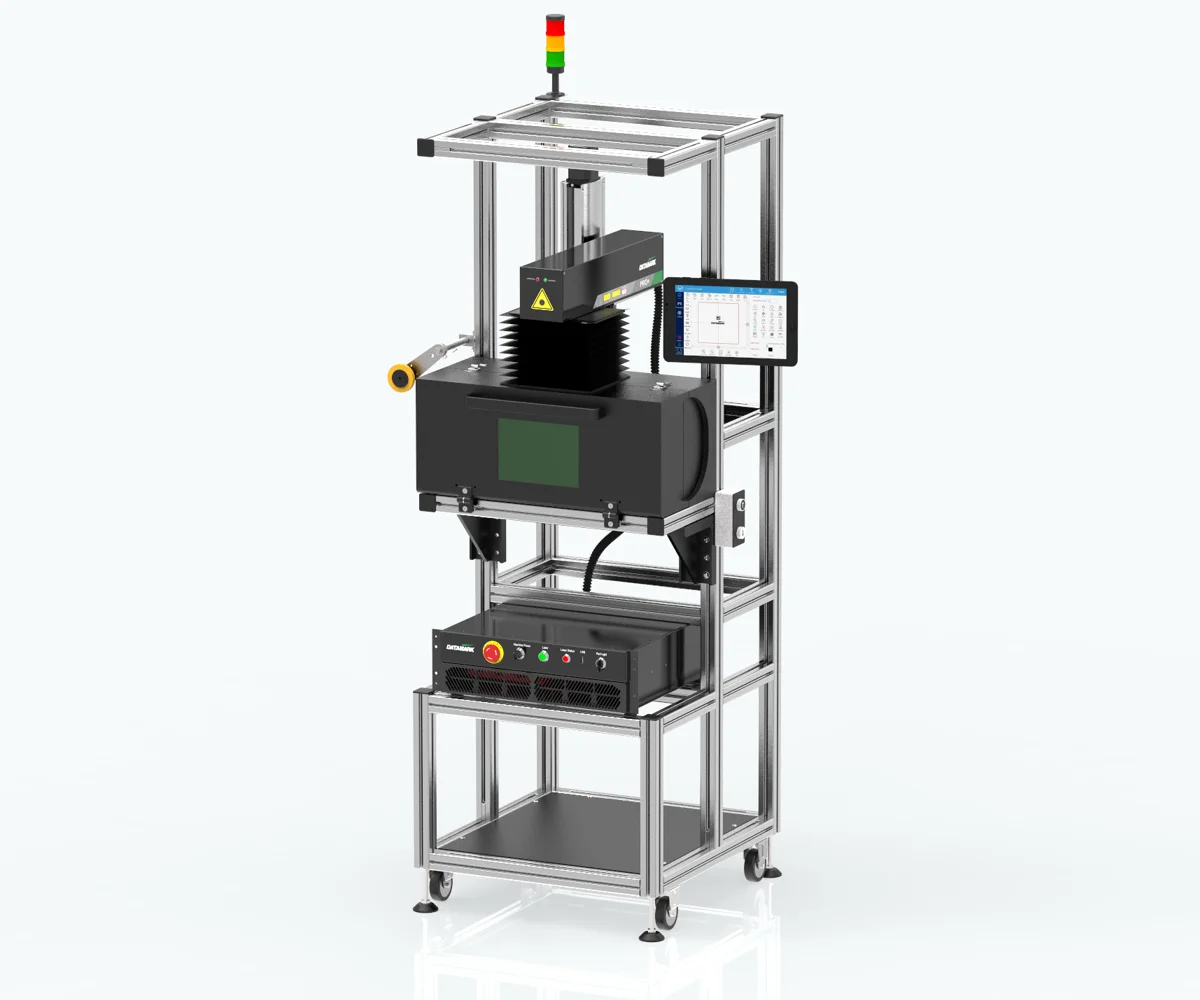
Datamark manufactures MOPA fibre, CO₂ and UV laser technologies to suit different materials, marking depths and surface finishes. Each technology is selected based on your specific marking application.
- MOPA fibre lasers: Ideal for all types of metals and some plastics.
- UV lasers: Perfect for delicate or heat-sensitive materials like plastics, glass and electronics.
- CO₂ lasers: Best for organic materials such as wood, cardboard, leather and acrylics.
MOPA lasers offer variable pulse control and greater marking quality across metals and plastics. Q-Switched lasers are limited, less precise, and more prone to damaging sensitive surfaces. Datamark uses only high-performance MOPA lasers for reliable results and durability.
- MOPA Fibre Lasers: Stainless steel, carbon steel, aluminium (bare and anodised), brass, copper, titanium, nickel, zinc, hard plastics.
- UV Lasers: HDPE, PVC, PET, ABS, silicone, glass, ceramics, silicon wafers, electronics.
- CO₂ Lasers: Wood, cardboard, paper, leather, acrylics, rubber, packaging films.
Serial numbers, logos, QR codes, barcodes, data matrix, batch data, swift codes, and variable text — all with high contrast and precision.
Yes. Laser engraving produces deep, long-lasting marks that withstand wear, heat and post-processing.
Up to ±0.01 mm, suitable for datamatrix codes, serials and micro text.
Depending on the application, speeds can reach up to 7,000 mm/s. For the same marking result, it is possible to increase the marking speed available from a higher power laser source.
Yes. Datamark offers integration-ready laser heads with full I/O connectivity and automation software compatibility.
Yes. Slightly curved surfaces are no problem, and optional rotary or 3D focus accessories are available for more complex shapes.
- Class 1: Fully enclosed and safe to operate without protective goggles.
- Class 4: Open-beam lasers that require goggles, controlled environments, and trained operators.
The systems include user-friendly software, clear manuals, and training — making setup and operation fast and simple. In addition, at Datamark we offer a delivery service and personalized training for the operation and maintenance of our laser markers at the client’s facilities.
Over 100,000 hours — equivalent to more than 10 years of typical industrial use, with minimal maintenance.
Laser systems cost more upfront but save over time due to zero consumables, low maintenance, and greater efficiency.
Designed, assembled and tested in our factory in Spain under CE standards. Datamark UK provides local support and service.
Directly through Datamark UK, with technical advice, quotes, demos and delivery all available.
They offer high-end performance at a lower price thanks to direct sales, reduced overheads and industry focus — with all advanced features included as standard.
Laser is contactless, precise, and ideal for small, high-contrast marks. Dot peen is mechanical, ideal for deep, durable identification on metals in harsh environments.
Yes, but they are not recommended. Most lack proper safety (Class 1 protection) and use fragile fibre-optic cables that can easily be damaged by bending, impact or improper handling — resulting in high repair costs.
Datamark does not manufacture portable laser systems for these reasons. Instead, we offer industrial-grade battery-powered portable dot peen marking machines that are safe, robust and ideal for marking heavy or stationary parts on-site — without any safety hazards or fragile components.
We offer pre-sales advice, live marking tests, delivery, setup and operator training, along with technical support and fast spare parts from our UK team.